EN
EN



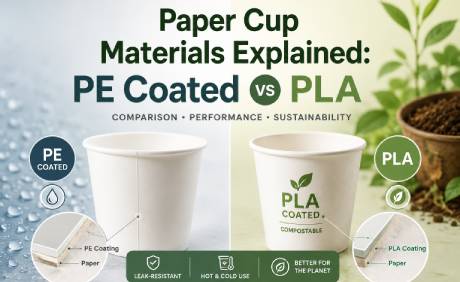
When choosing disposable paper cups, especially for coffee shops, food service brands, and packaging manufacturers, two of the most commonly used materials are PE coated paper cups and PLA coated paper cups.
Although they may look similar on the surface, their coating materials, environmental impact, performance, and cost are quite different.
In this article, we will break down the key differences between PE vs PLA paper cup materials, helping you choose the right solution for your business.
What Are PE Coated Paper Cups?
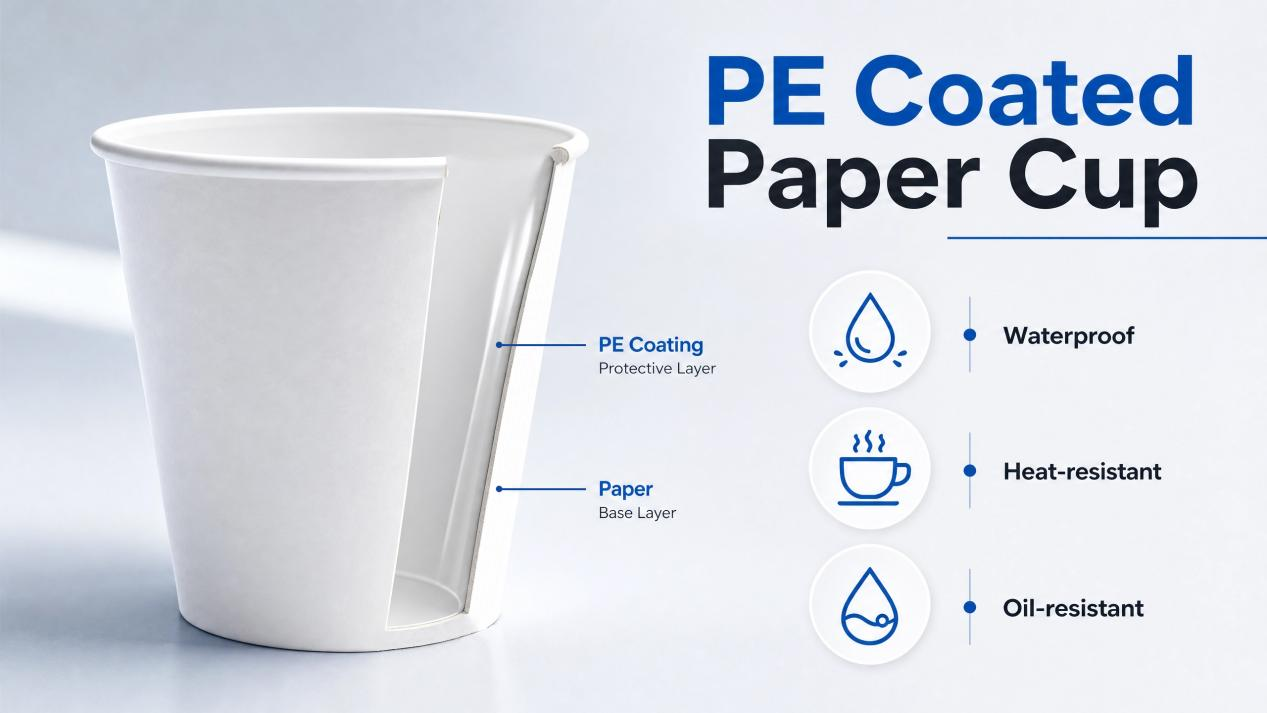
PE stands for Polyethylene (PE), a type of plastic coating applied to paper cups.
This thin layer is laminated onto the paper surface to make the cup:
· Waterproof
· Heat-resistant (for hot drinks)
· Oil-resistant
PE coated cups are currently the most widely used paper cup type in the global market due to their low cost and stable performance.
Key Advantages of PE Coated Cups
· Lower production cost
· Excellent leak resistance
· Suitable for both hot and cold drinks
· Mature production technology
Limitations
· Not fully biodegradable
· Difficult to recycle in standard paper recycling systems
· Environmental regulations may restrict usage in some regions
What Are PLA Coated Paper Cups?
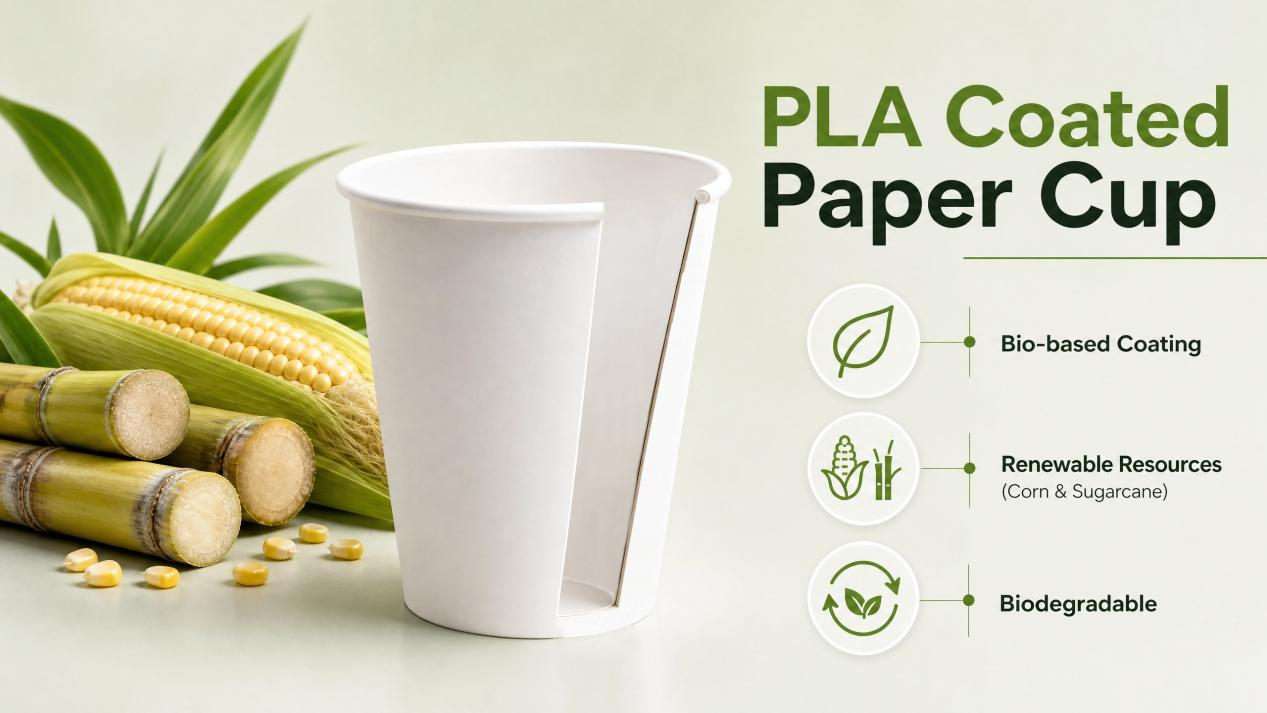
Polylactic Acid (PLA) is a biodegradable material made from renewable resources such as corn starch or sugarcane.
Instead of petroleum-based plastic, PLA provides a bio-based coating alternative for paper cups.
Key Advantages of PLA Cups
· Biodegradable under industrial composting conditions
· Renewable raw materials
· Lower carbon footprint compared to PE
· Suitable for eco-friendly branding
Limitations
· Requires industrial composting facilities (not home compostable in most cases)
· Higher cost compared to PE cups
· Lower heat resistance in some applications
· Limited infrastructure in some regions
PE vs PLA: Key Differences Overview
| Feature | PE Coated Cups | PLA Coated Cups |
| Raw Material | Petroleum-based plastic | Plant-based bioplastic |
| Environmental Impact | Non-biodegradable | Compostable (industrial) |
| Cost | Lower | Higher |
| Recycling | Difficult | Requires composting system |
| Heat Resistance | Strong | Moderate |
| Market Usage | Mass market standard | Eco-friendly premium segment |
Performance Comparison in Real Use
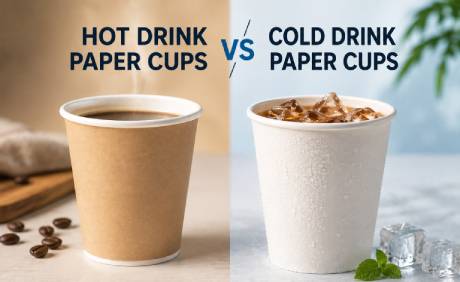
1. Hot Drinks Performance
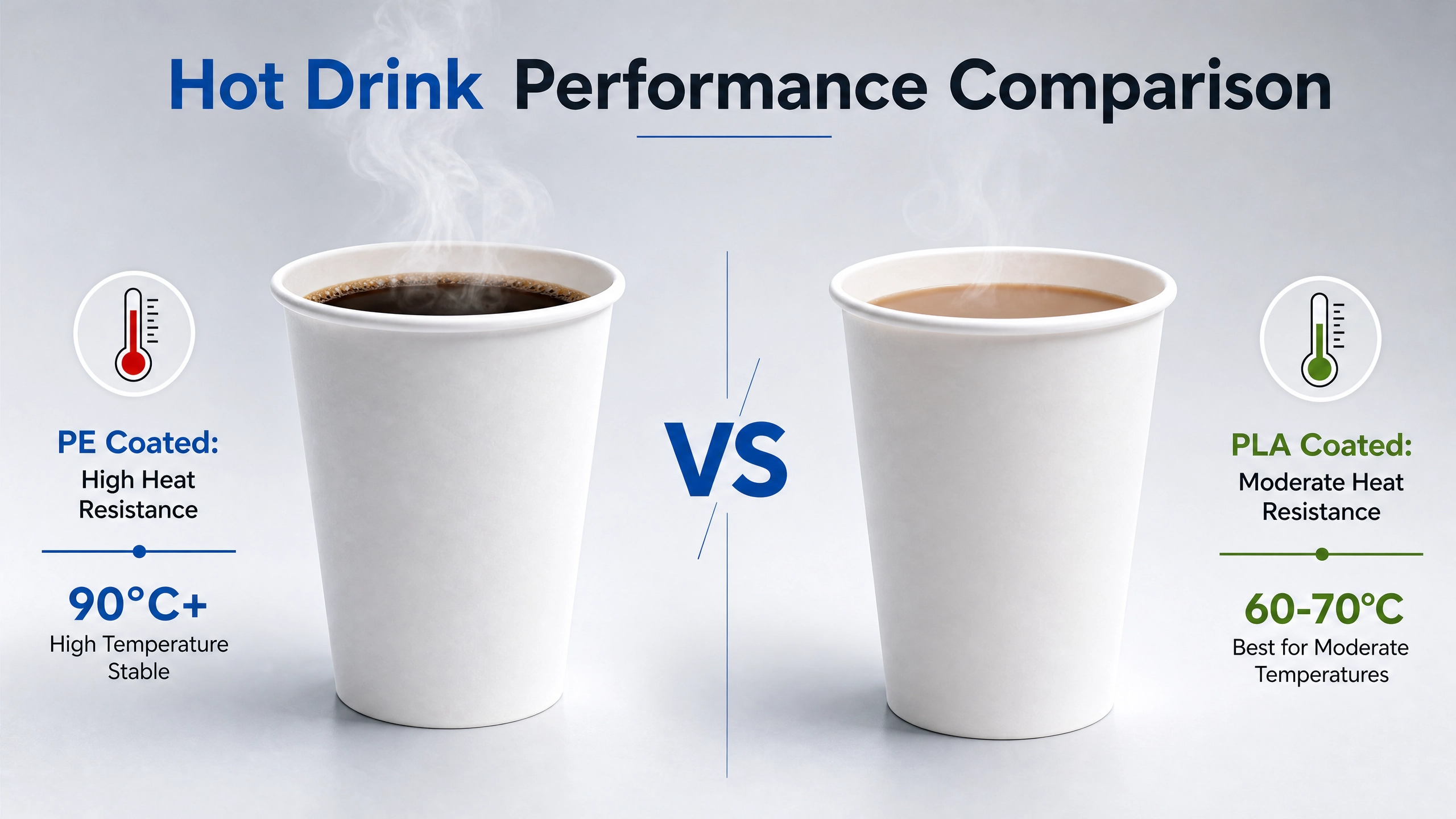
PE coated cups generally perform better for high-temperature beverages, such as coffee, tea, and hot chocolate.
PLA cups can soften under very high heat, making them more suitable for moderate temperature drinks.
2. Cold Drinks Performance
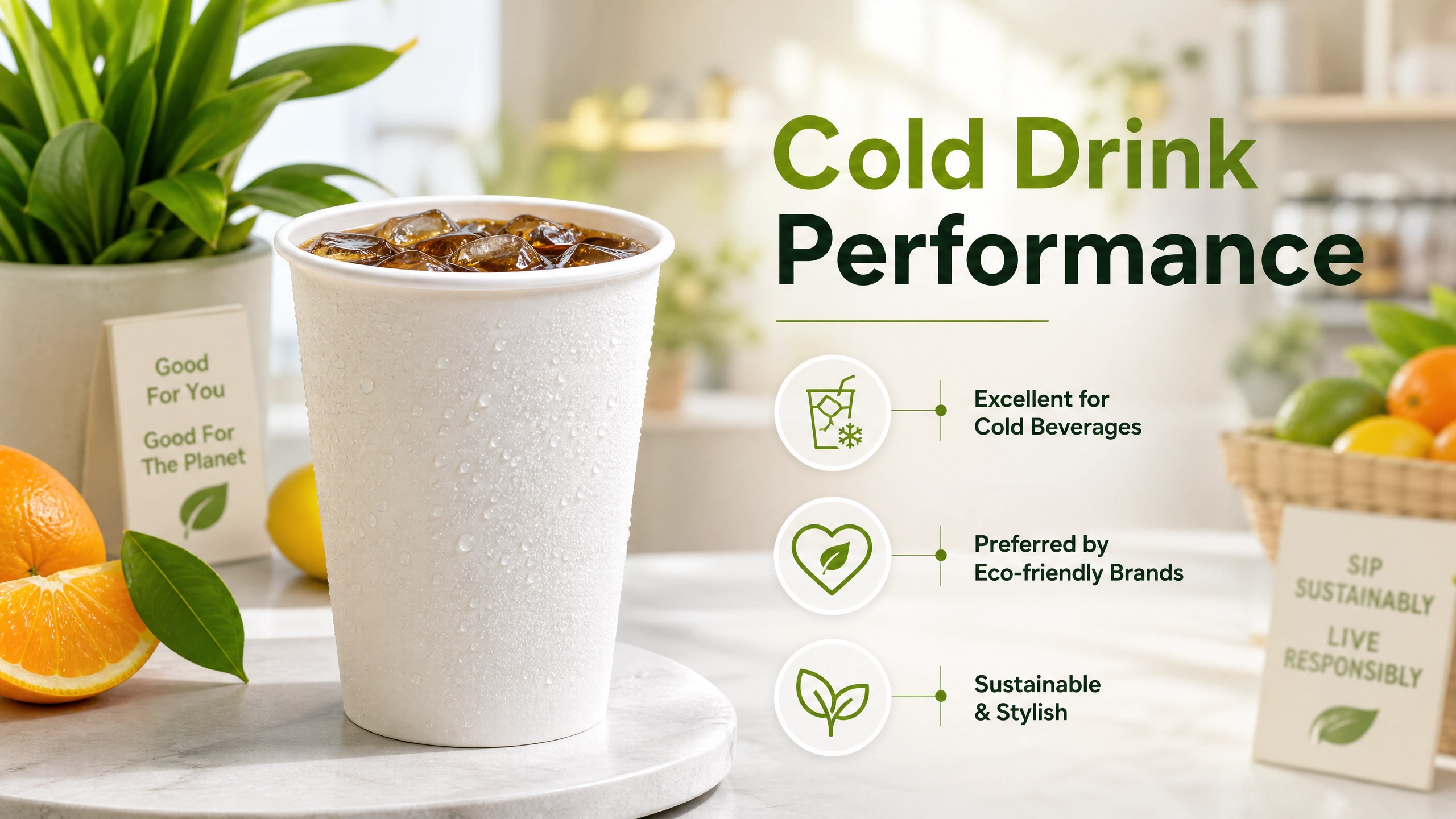
Both materials perform well for cold drinks, but PLA cups are often preferred in eco-friendly cold beverage brands such as juice bars and sustainable cafés.
3. Environmental Impact
This is where the biggest difference lies:
· PE cups contribute to long-term plastic waste
· PLA cups reduce reliance on fossil fuels and support compostable waste systems
However, PLA’s environmental benefit depends heavily on whether industrial composting facilities are available.
Which One Should You Choose?
Choosing between PE and PLA depends on your business goals:
Choose PE Coated Cups if:
· You need cost-effective mass production
· You operate in a market without composting infrastructure
· You prioritize durability and heat resistance
Choose PLA Coated Cups if:
· You target eco-conscious consumers
· Your brand emphasizes sustainability
· Your market supports composting systems
Industry Trend: Moving Toward Sustainability
Globally, the paper cup industry is gradually shifting toward more sustainable solutions. Many brands are testing or partially adopting PLA-based cups to reduce environmental impact.
However, PE coated cups still dominate due to their cost advantage and strong supply chain stability.
Conclusion
Both PE and PLA coated paper cups have clear strengths and limitations.
· PE coated cups = practical, affordable, widely used
· PLA coated cups = eco-friendly, premium positioning, future-oriented
Understanding the difference helps businesses make smarter decisions based on cost, performance, and sustainability goals.