EN
EN



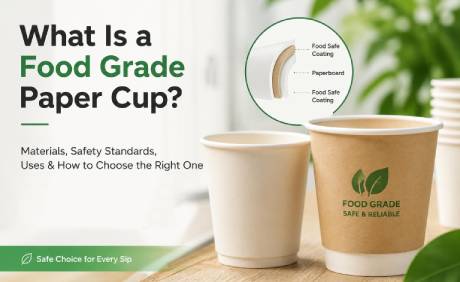
In the food and beverage packaging industry, food grade paper cups play a crucial role in ensuring safety, hygiene, and product quality. Whether used in cafés, fast food chains, or takeaway services, these cups are designed to safely hold hot and cold beverages without compromising human health.
This article explains what a food grade paper cup is, what materials are used, why certification matters, and how to choose the right supplier for your business.
What Does “Food Grade” Mean?
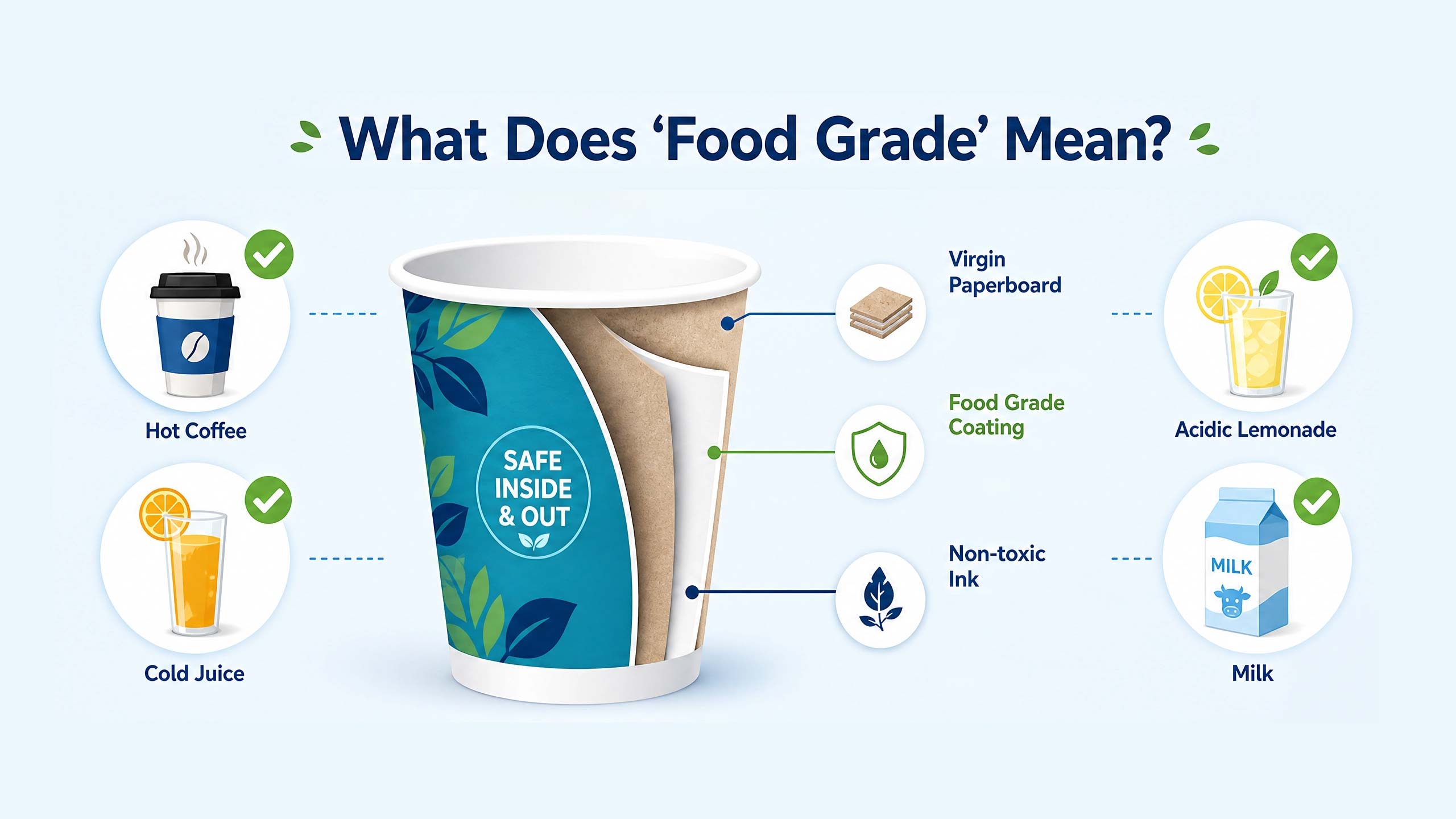
“Food grade” refers to materials that are safe for direct contact with food and beverages. In the case of paper cups, it means every layer of the cup—including paperboard, coatings, and inks—meets strict safety standards.
A food grade paper cup must not release harmful substances when exposed to:
· Hot liquids (coffee, tea)
· Cold drinks (juice, soda)
· Acidic beverages (lemon drinks)
· Dairy products (milk-based drinks)
What Are Food Grade Paper Cups Made Of?
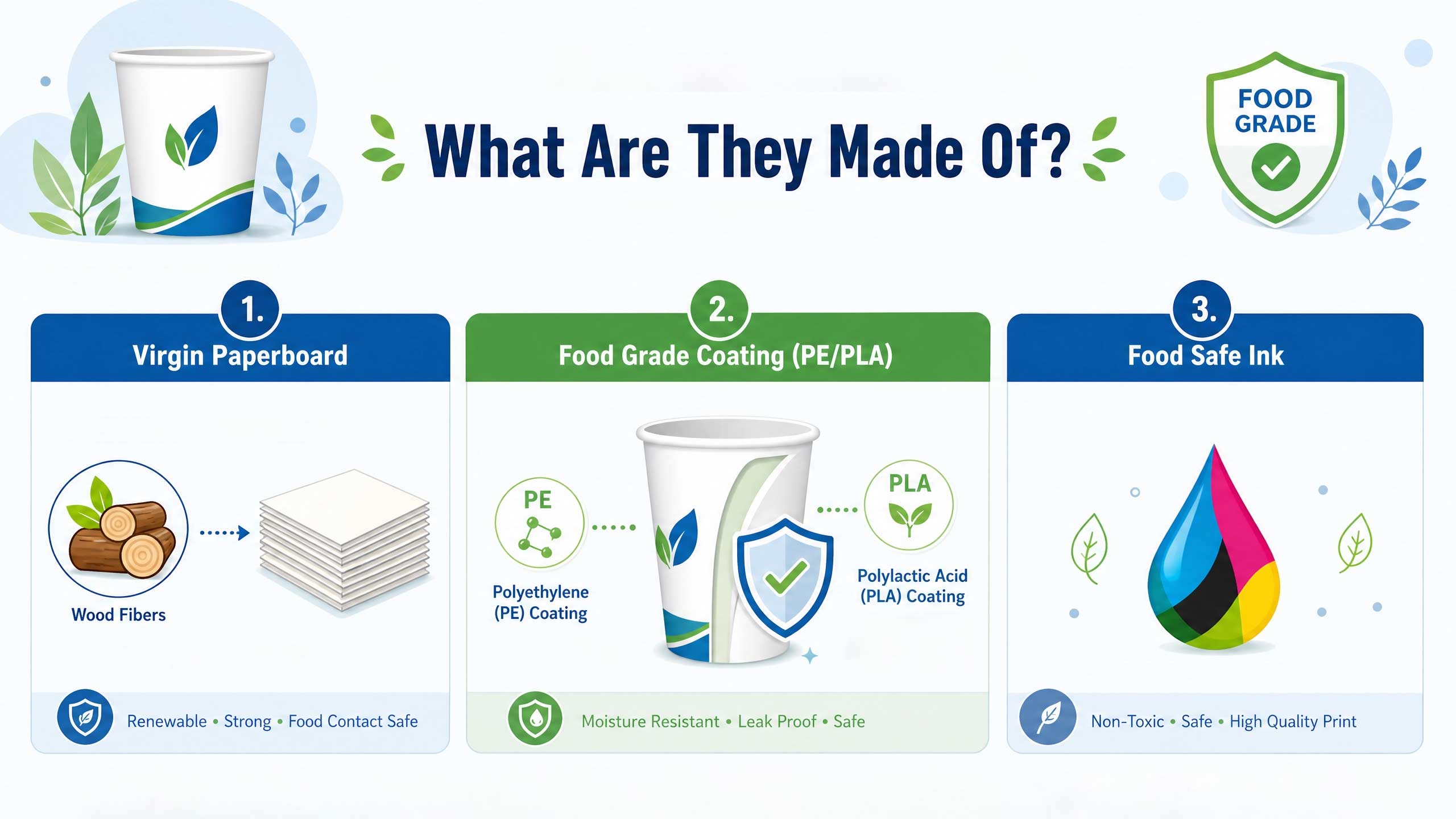
Food grade paper cups are usually made from a combination of materials designed for strength, insulation, and safety:
1. Paperboard (Base Material)
High-quality virgin paperboard is commonly used to ensure durability and cleanliness.
2. Food Grade Coating
The inner lining prevents leakage and maintains structure:
· PE Coating (Polyethylene) – Common, cost-effective, moisture resistant
· PLA Coating (Polylactic Acid) – Biodegradable and eco-friendly option
3. Food Safe Printing Ink
Printed designs use non-toxic inks to ensure safety during contact and heating.
Why Food Grade Certification Is Important
Food grade certification ensures that the paper cups meet international safety standards such as FDA or EU regulations.
Key benefits include:
· Prevents chemical contamination
· Ensures safe consumption experience
· Builds trust with customers
· Complies with export/import regulations
· Reduces brand liability risks
For cafés and beverage brands, using certified food grade paper cups is not just a choice—it is a requirement in many markets.
Common Uses of Food Grade Paper Cups
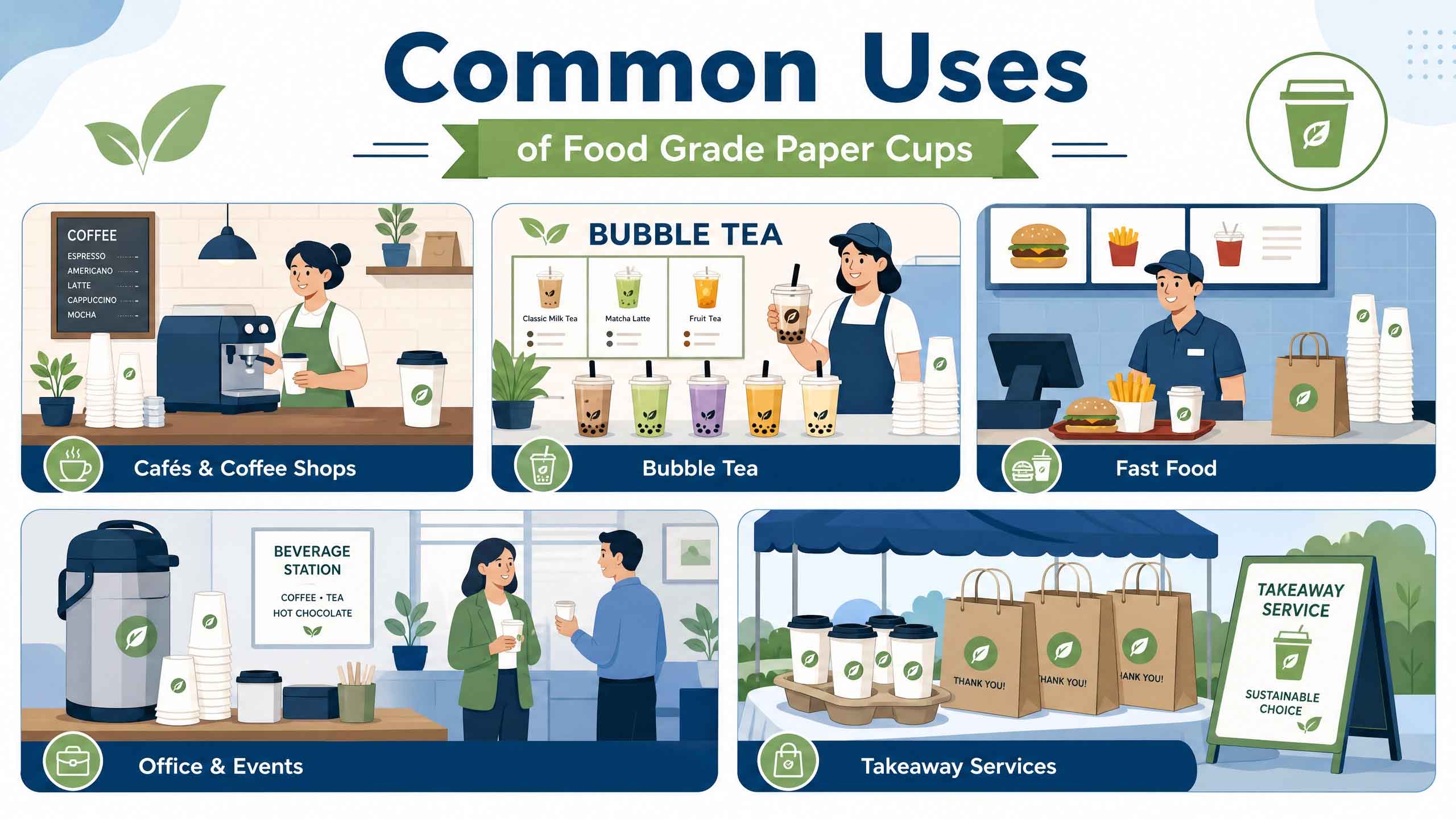
Food grade paper cups are widely used across the food service industry:
· Coffee shops and cafés
· Bubble tea shops
· Fast food restaurants
· Catering services
· Office beverage stations
· Events and takeaway services
Food Grade Paper Cup vs Non-Food Grade Cup
Not all paper cups on the market are truly food safe. Here’s the key difference:
| Feature | Food Grade Cup | Non-Food Grade Cup |
| Material safety | Certified safe | May contain harmful additives |
| Coating | Food-safe PE/PLA | Industrial coating |
| Usage | Beverage & food | Non-food applications |
| Compliance | FDA / EU standards | Not guaranteed |
How to Choose a Reliable Food Grade Paper Cup Supplier
When sourcing paper cups for your business, consider the following:
· Certification (FDA, SGS, EU compliance)
· Material options (PE or PLA)
· Printing quality and customization
· Production capacity and MOQ
· Leak-proof and heat resistance performance
A reliable supplier ensures consistent quality and helps your brand maintain professional standards.
Conclusion
A food grade paper cup is more than just packaging—it is a safety guarantee for your customers and a quality standard for your brand. Understanding materials, coatings, and certifications helps businesses make better sourcing decisions.
Whether you run a café, restaurant, or beverage brand, choosing certified food grade paper cups is essential for safety, compliance, and customer trust.