EN
EN



Fresh salads have become one of the fastest-growing food categories worldwide. Whether for dine-in, takeaway, meal prep, or food delivery, choosing the right salad bowl packaging directly affects food presentation, freshness, leak resistance, and customer satisfaction.
Today, paper salad bowls are the preferred packaging solution because they are lightweight, customizable, and suitable for both hot and cold foods.
This guide explains the most common salad bowl packaging types, their advantages, and how to choose the best option for your business.
Why Salad Bowl Packaging Matters
A salad bowl is much more than a simple container. The right packaging helps businesses:
· Keep salads fresh longer
· Prevent dressing leaks
· Maintain food presentation
· Improve delivery performance
· Enhance brand recognition through custom printing
· Meet food safety requirements
Poor packaging can lead to soggy vegetables, damaged ingredients, and unhappy customers.
Common Salad Bowl Packaging Types
Different food businesses require different packaging solutions. Below are the most popular options.
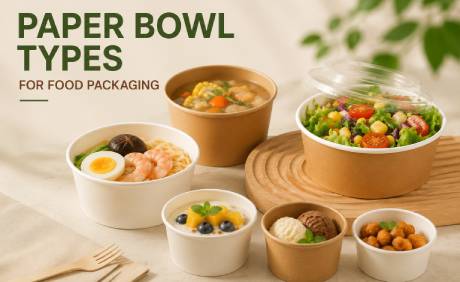
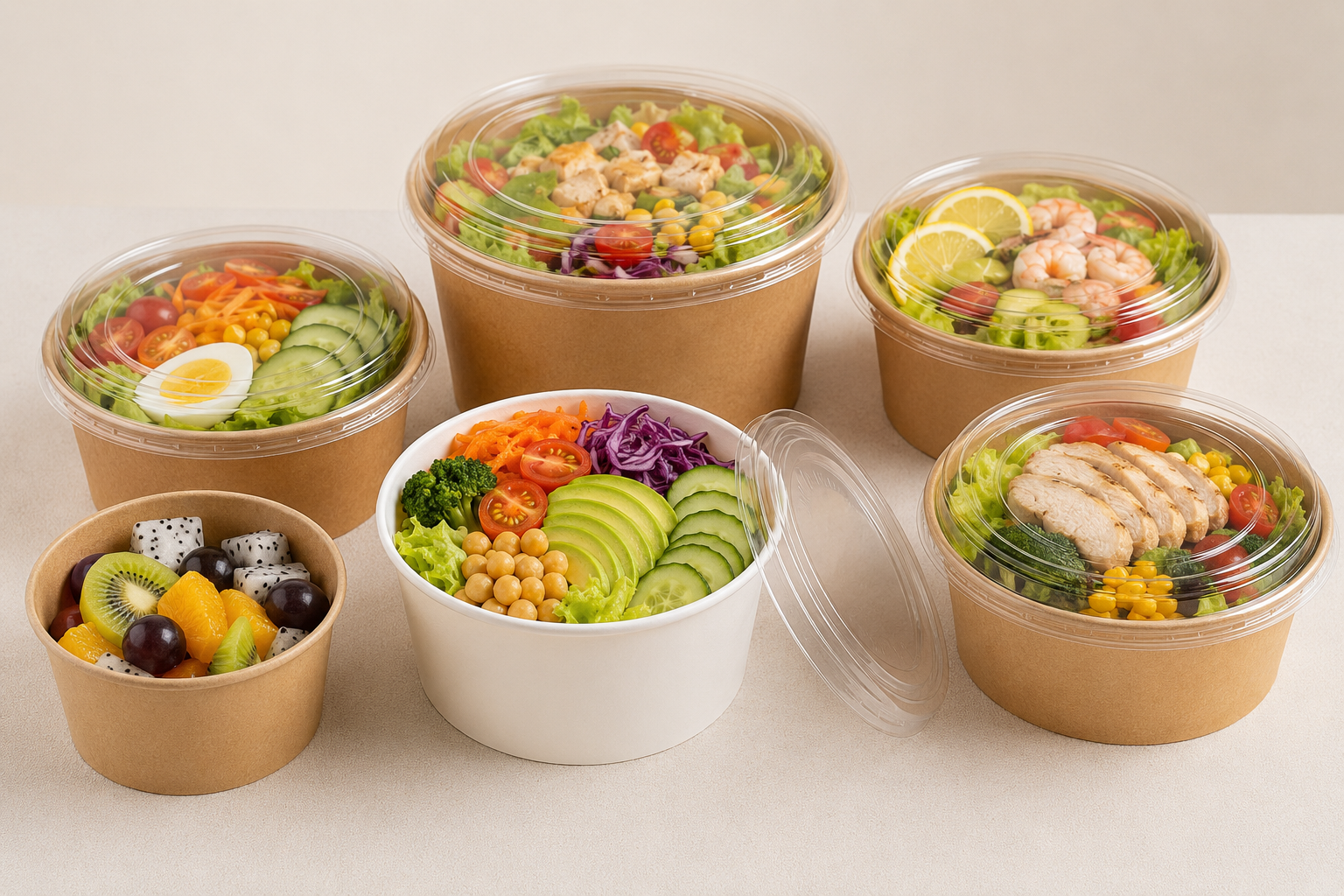
1. Kraft Paper Salad Bowls
Kraft paper bowls are one of the most popular packaging choices.
Features
· Natural brown appearance
· Eco-friendly look
· Strong structure
· Suitable for cold and warm foods
· Supports custom logo printing
These bowls are widely used by organic restaurants, healthy food chains, and salad shops because they create a premium natural image.
Best For
· Green salad
· Grain bowls
· Fruit bowls
· Poke bowls
2. White Paper Salad Bowls
White paper bowls offer a clean and modern appearance.
Advantages
· Bright surface for colorful printing
· Premium presentation
· Excellent branding opportunities
· Suitable for restaurants and franchises
Many international restaurant brands choose white bowls because logos and product information are easier to display.
3. PE-Coated Paper Salad Bowls
PE-coated bowls include a polyethylene lining that prevents moisture penetration.
Benefits
· Leak-resistant
· Oil-resistant
· Strong durability
· Suitable for dressings and sauces
These are ideal for salads containing vinaigrettes, olive oil, or creamy dressings.
4. PLA-Coated Salad Bowls
PLA coating is made from plant-based materials.
Advantages include:
· Renewable material option
· Suitable for compostable packaging programs
· Excellent grease resistance
· Attractive for environmentally conscious brands
Many businesses use PLA-coated bowls to meet sustainability goals where composting facilities are available.
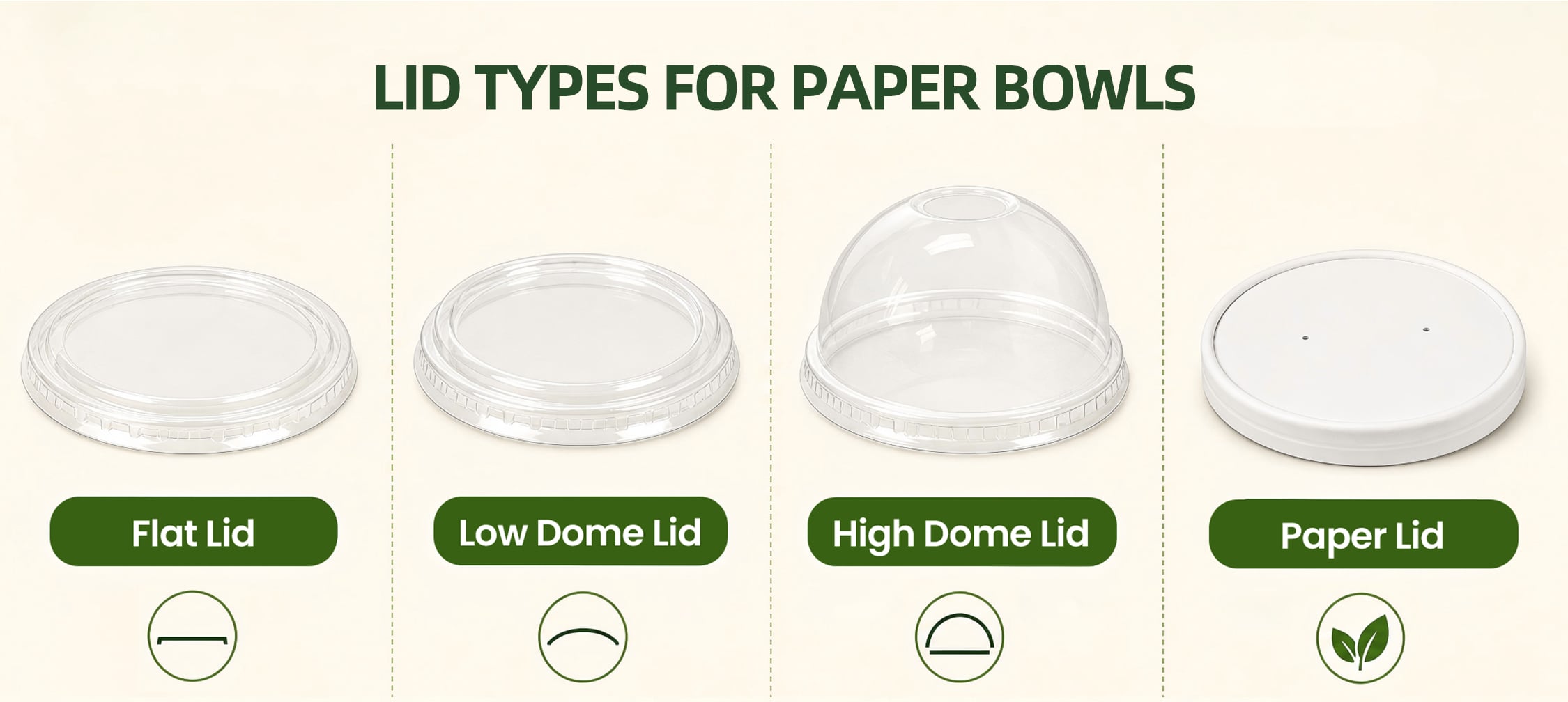
Salad Bowl Packaging by Lid Type
The lid is just as important as the bowl itself.
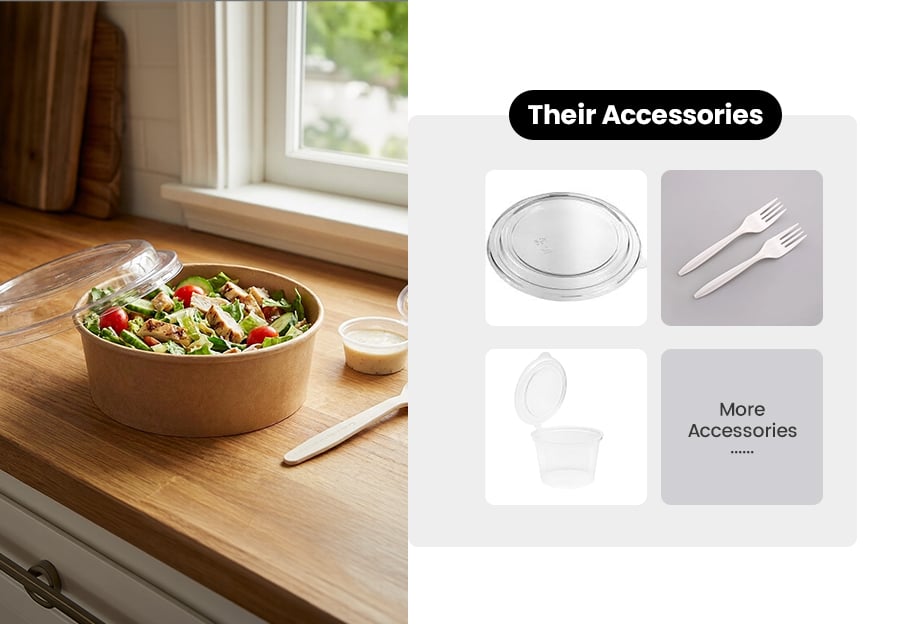
PET Clear Lid
The most common option.
Advantages:
· Crystal-clear visibility
· Strong seal
· Lightweight
· Excellent product display
Perfect for supermarkets, salad bars, and grab-and-go meals.
PP Lid
PP lids provide higher heat resistance.
Suitable for:
· Warm grain bowls
· Rice bowls
· Mixed meals
· Hot side dishes
Paper Lid
Paper lids create a consistent paper appearance.
Benefits include:
· Premium branding
· Reduced plastic usage
· Suitable for takeaway
Dome Lid
A dome lid provides extra internal space.
Ideal for:
· High-volume salads
· Large toppings
· Chicken salads
· Fruit bowls
Salad Bowl Packaging by Capacity
Different menu items require different bowl sizes.
| Capacity | Common Uses |
| 500 ml | Side salads |
| 750 ml | Standard lunch salads |
| 1000 ml | Meal-sized salads |
| 1100–1300 ml | Large takeaway meals |
| 1500 ml | Family sharing |
| 1700–2000 ml | Catering and party meals |
Selecting the proper size minimizes food movement during transportation while improving presentation.
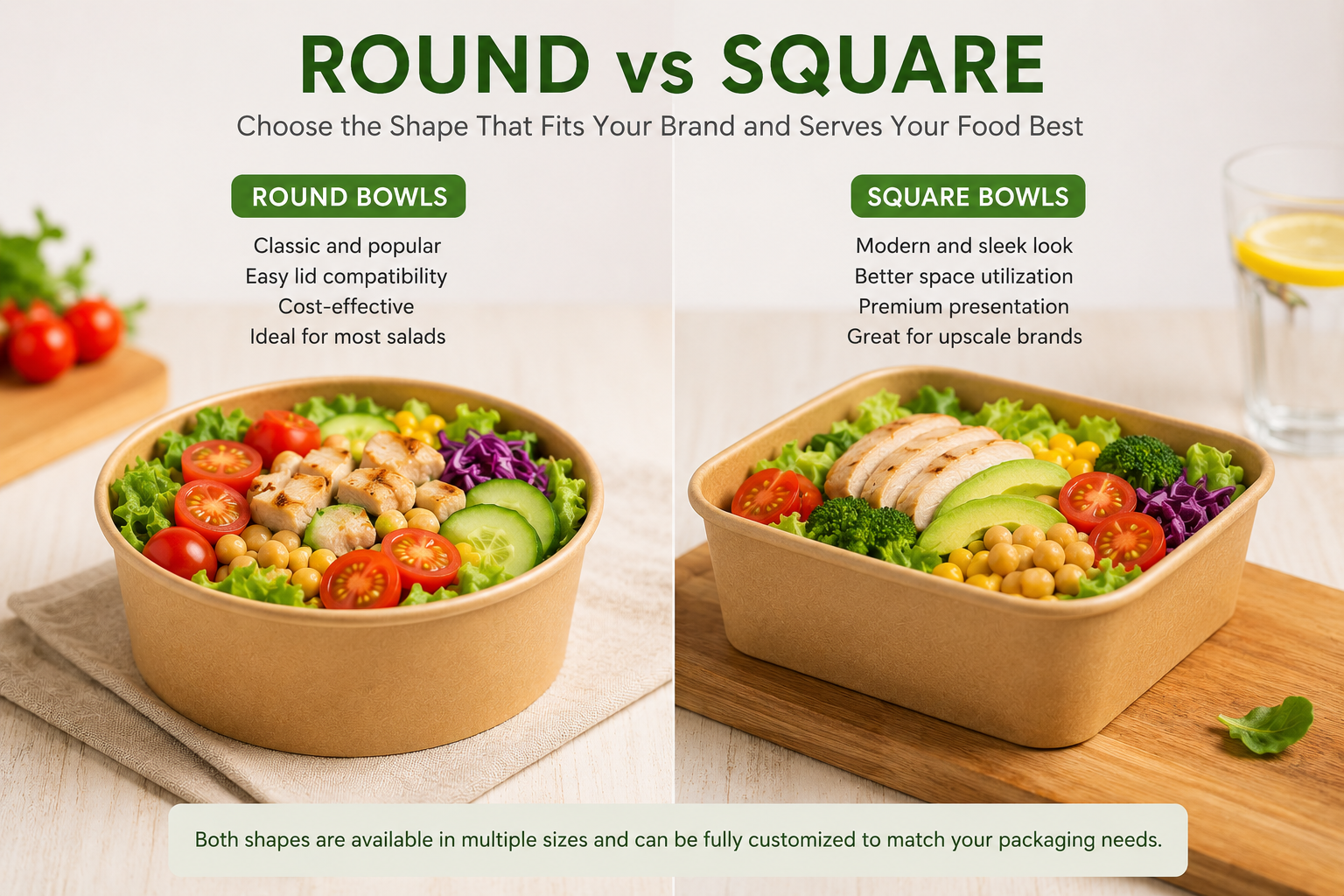
Round vs Square Salad Bowls
Round Bowls
Advantages
· Most popular design
· Easy lid compatibility
· Cost-effective
· Efficient manufacturing
Suitable for nearly all salad applications.
Square Bowls
Advantages
· Modern appearance
· Better shelf utilization
· Premium presentation
Often chosen by upscale restaurants and premium meal brands.
Packaging Based on Food Type
Different salads have different packaging requirements.
| Food Type | Recommended Bowl |
| Green Salad | Kraft Paper Bowl |
| Caesar Salad | PE-Coated Bowl |
| Fruit Salad | White Bowl + PET Lid |
| Poke Bowl | Large Kraft Bowl |
| Grain Bowl | PP Lid Bowl |
| Pasta Salad | PE-Coated Bowl |
| Chicken Salad | Dome Lid Bowl |
| Family Salad | Large Capacity Bowl |
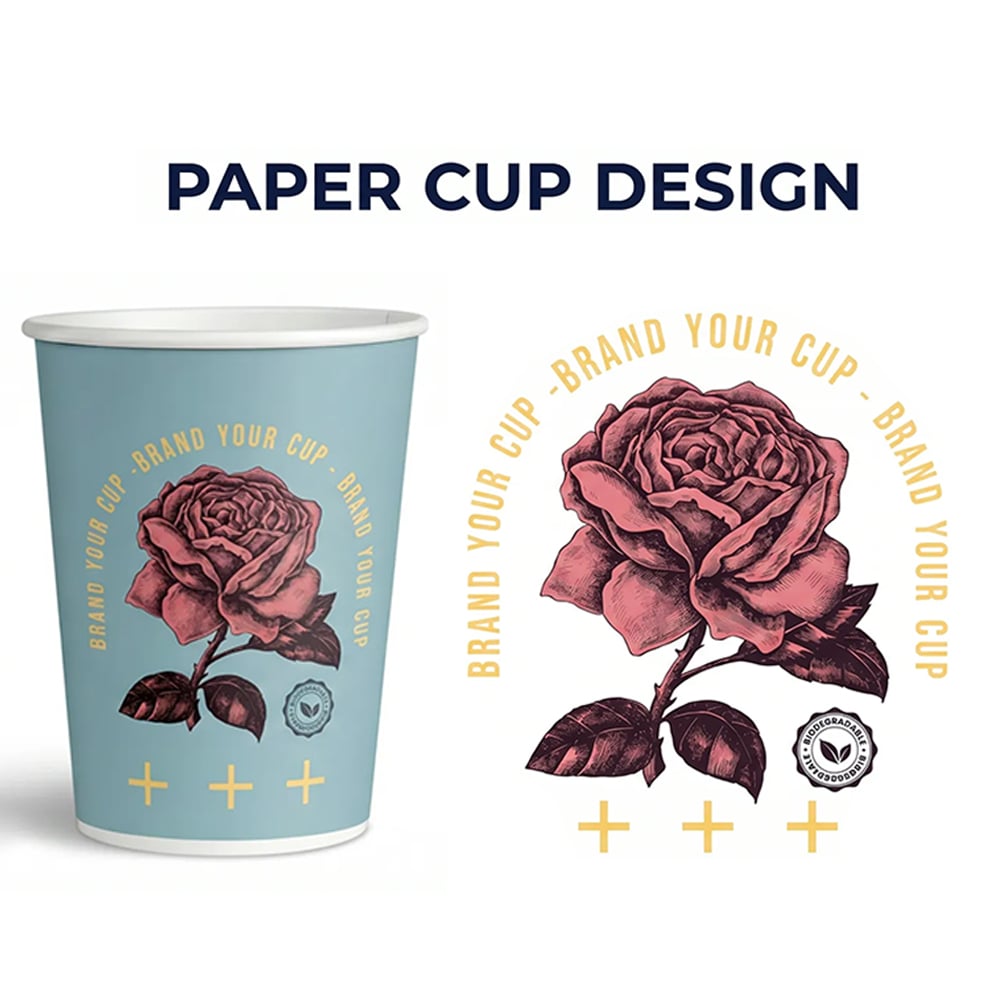
Custom Printed Salad Bowl Packaging
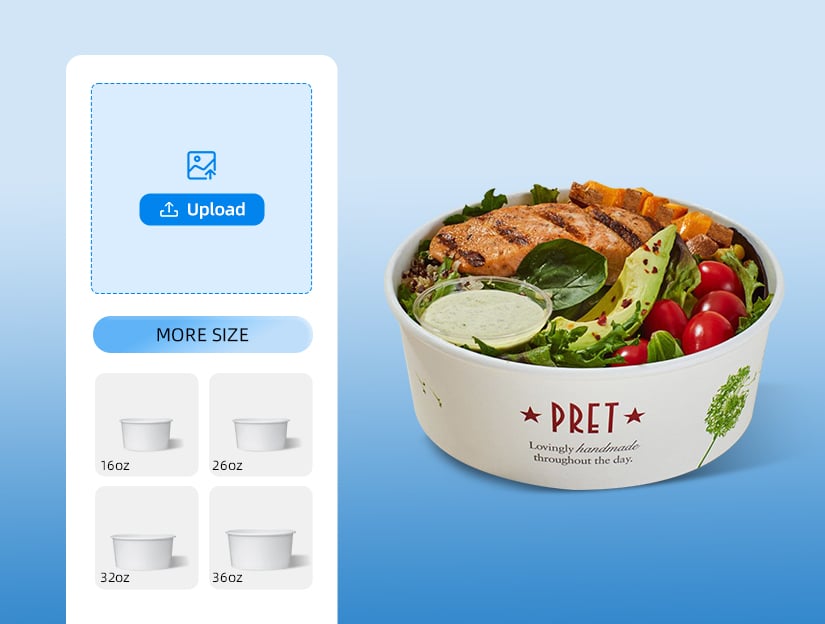
Custom printing transforms disposable packaging into an effective marketing tool.
Businesses commonly print:
· Company logo
· Brand colors
· QR codes
· Promotional messages
· Social media accounts
· Product information
High-quality printing increases brand recognition while creating a professional appearance.
How to Choose the Right Salad Bowl Packaging
Before ordering, consider the following questions:
· Is the food served hot or cold?
· Will customers dine in or order delivery?
· Does the salad contain heavy dressing?
· What portion sizes are offered?
· Is branding important?
· Which lid type provides the best protection?
· Are sustainability goals part of your business strategy?
Choosing packaging based on your menu and service style improves customer experience while reducing waste and transportation issues.
Conclusion
Selecting the right salad bowl packaging is about more than choosing a container. Material, coating, lid type, capacity, and branding all influence food quality, customer satisfaction, and operational efficiency.
Whether you operate a salad bar, restaurant, supermarket, or food delivery business, choosing the appropriate paper salad bowl packaging helps protect your food, strengthen your brand, and create a better customer experience.
If you're looking for custom printed paper salad bowls in multiple sizes and packaging options, partnering with an experienced manufacturer can help you find the ideal solution for your business.